09 November 2006

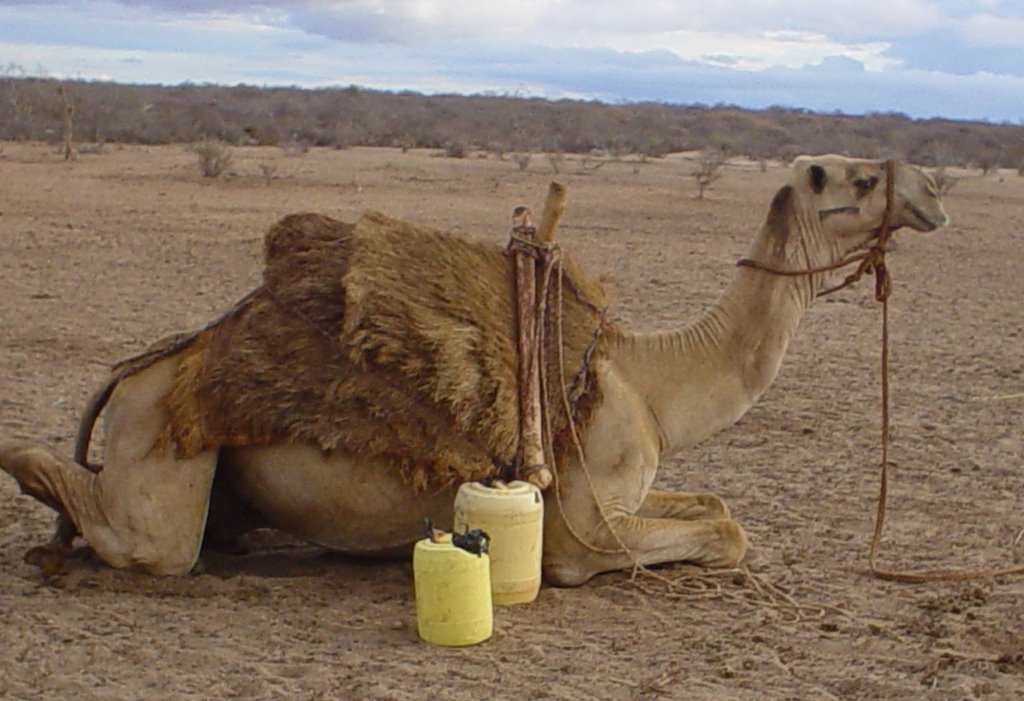
Camels and Donkeys at the "Dam"


Many people come from as far away as 20 miles! They use camels to carry the water.


These guys reluctantly agreed to let me take this photo.


There's been a problem with the water getting dirty. Many people allow their goats, donkeys, cattle, camels, etc to step into the dam in order to drink. Naturally their feet are dirty and then the water gets too dirty for human consumption.

So... the community is building troughs. They'll be filled with water for the livestock to use. This will hopefully keep the dam water cleaner.

These donkeys have carried stones that will be used to build the troughs.

I got a text message from Ahmed (see next post) the other day. He told me they had finished building the troughs. I think he told me they had planned to build 8-10 of them.


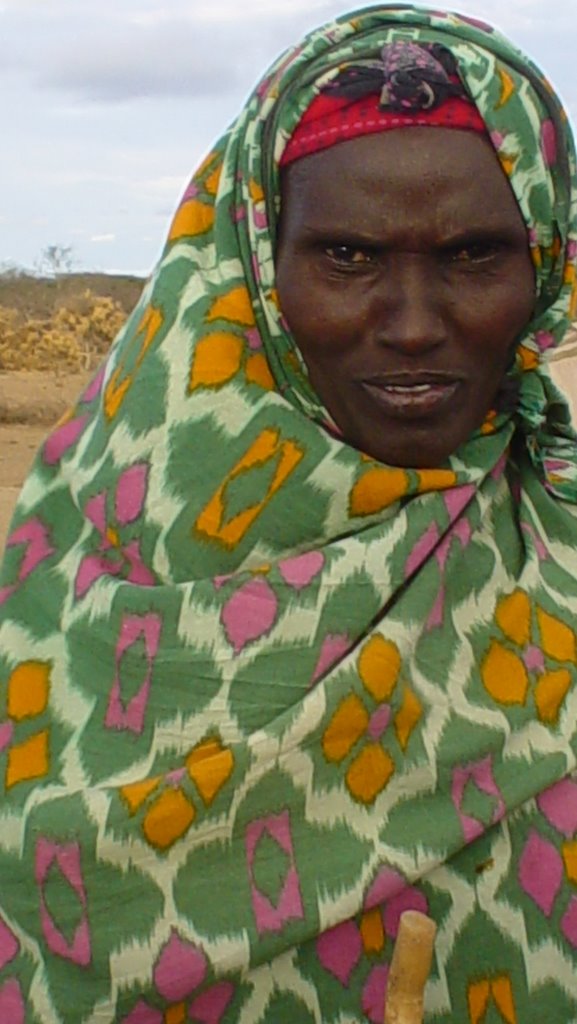
Community Water Committee

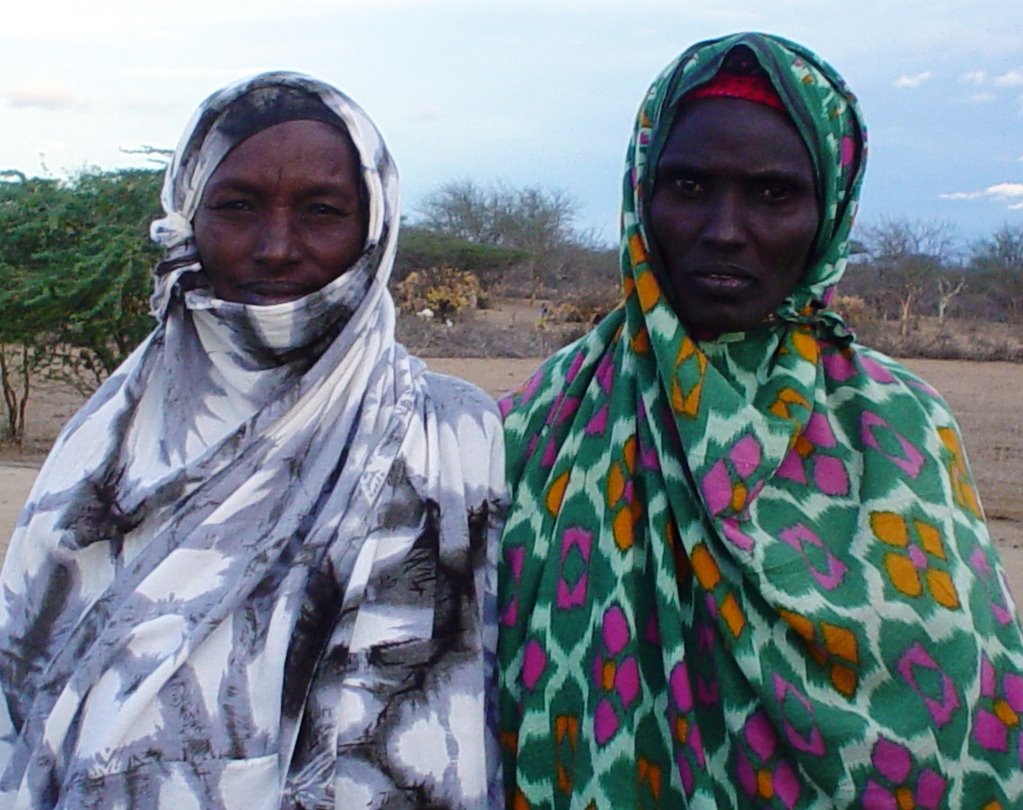
This woman was very, very hesitant to allow me to take her photo. She shyly told me "no" on each of my initial requests. Eventually she agreed. She's on the community "water committee". She answered many of my questions about the dam.


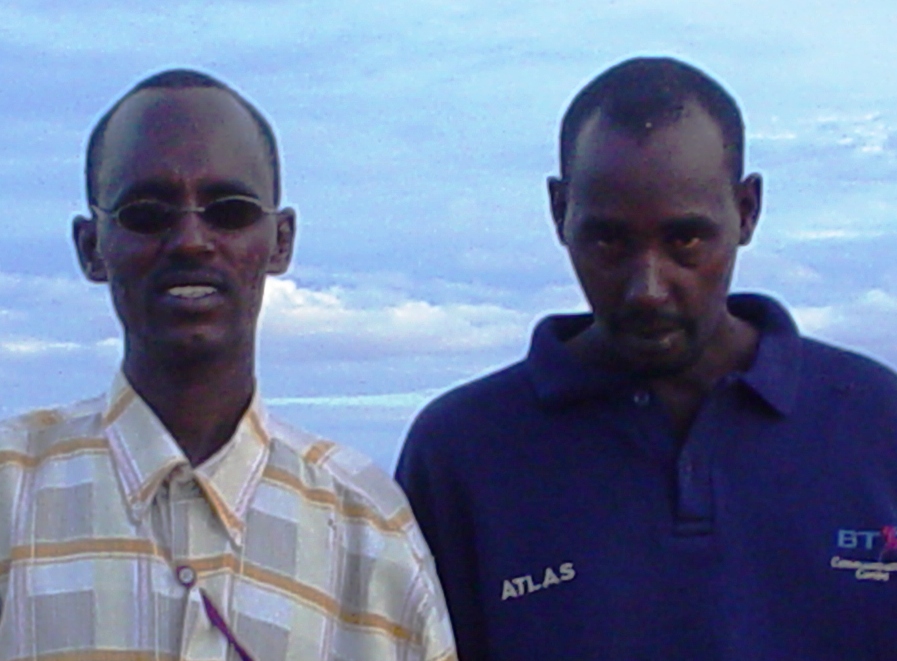
These two guys (one of which is Ahmed) are also on the water committee. They also answered my many questions and proudly told me all about the dam and the trough project. The ONLY reason I got ANY pictures at the dam is because I was with them. They served as my tour guides (so-to-speak) and also served as an intermediary between me (and my white skin and camera) and the reticent people collecting water.


This other woman FINALLY agreed to be photographed. She's also on the committee and proudly, but shyly, told me about the dam.

Much of the time, I'm a frustrated photographer in Kenya. My time at Bangale (and recently in West Pokot) stand out as being the most frustrating to me.

There is SO much I see that I can't capture on film for the benefit of all of you. Sorry.

Various Structures

This is a "choo" (pit-latrine toilet) and "washroom".


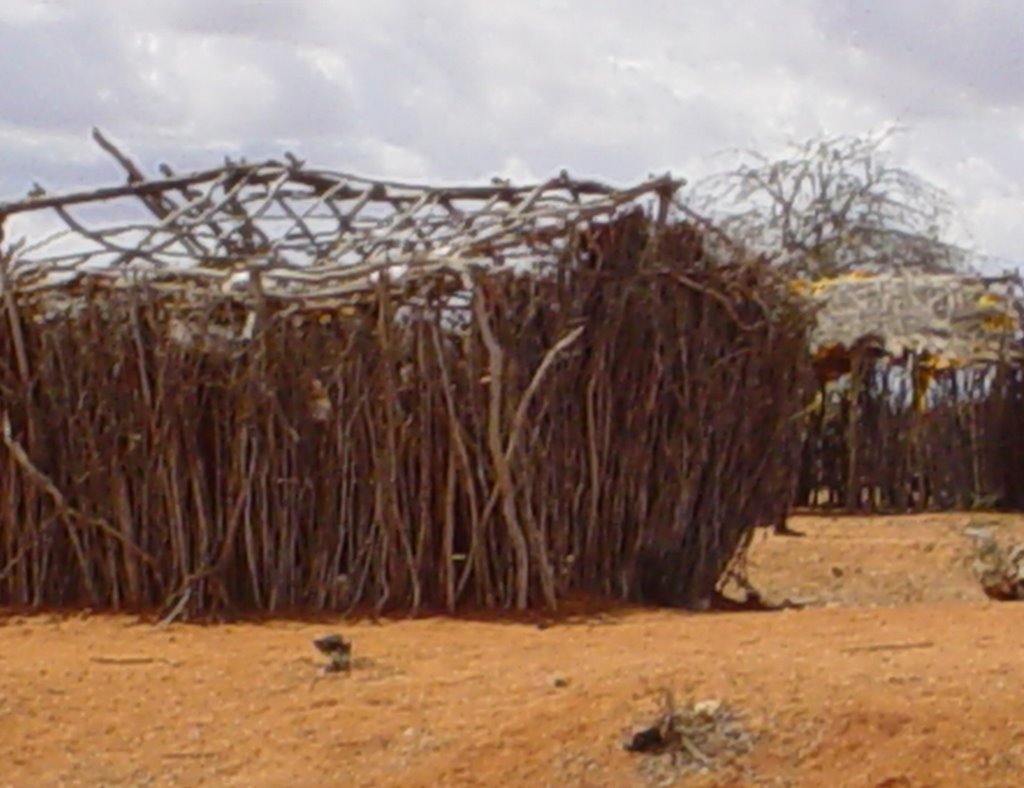
This is the "market". It sits idle except on market day when folks come from a wide radius to trade goods. The structures are made of sticks. On top, for the roofs, are branches that still have leaves on.


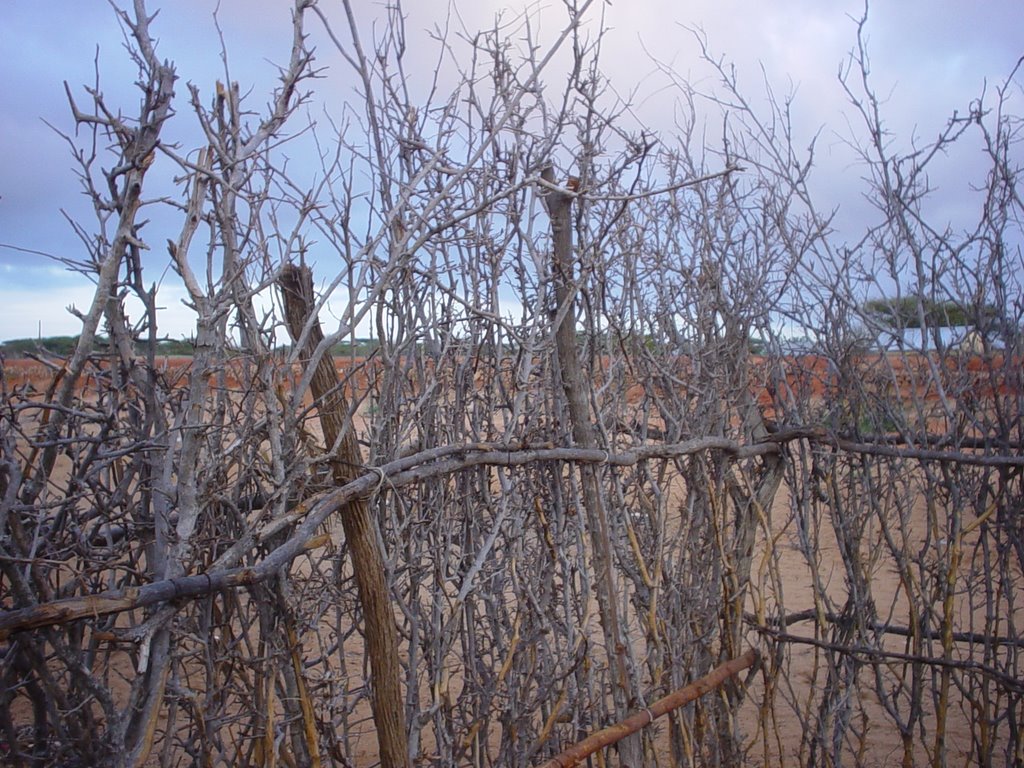
A close-up shot of a fence.


Another shot of the market kiosks.


This picture was taken closer to Garissa. The houses there were primarily made of mud (as they are in most of Kenya). I found the "fence" here rather interesting. It's made of all sorts of odds and ends.

A "House in a Tree"

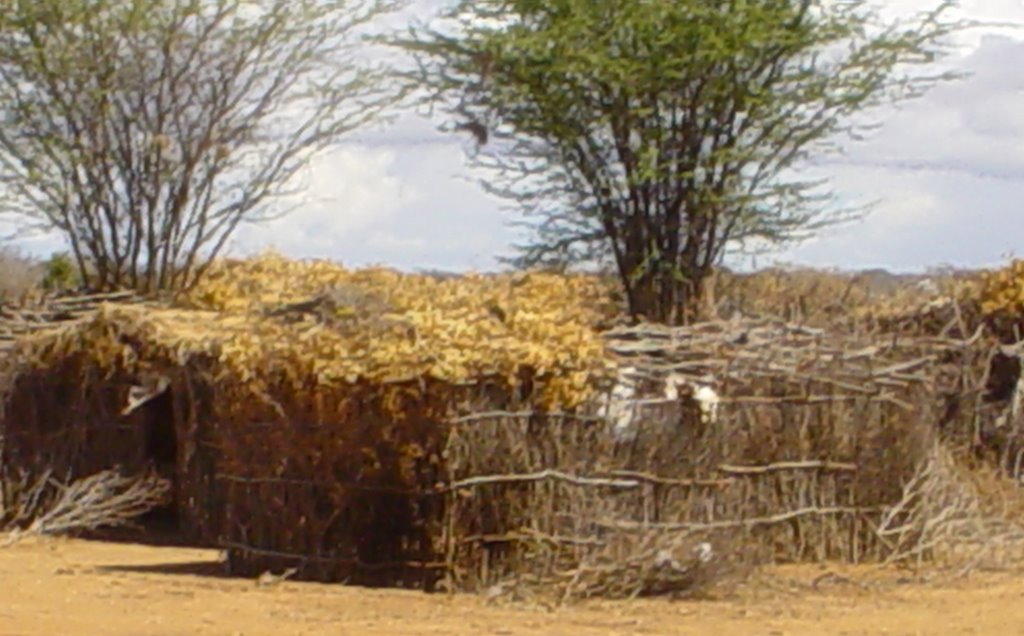
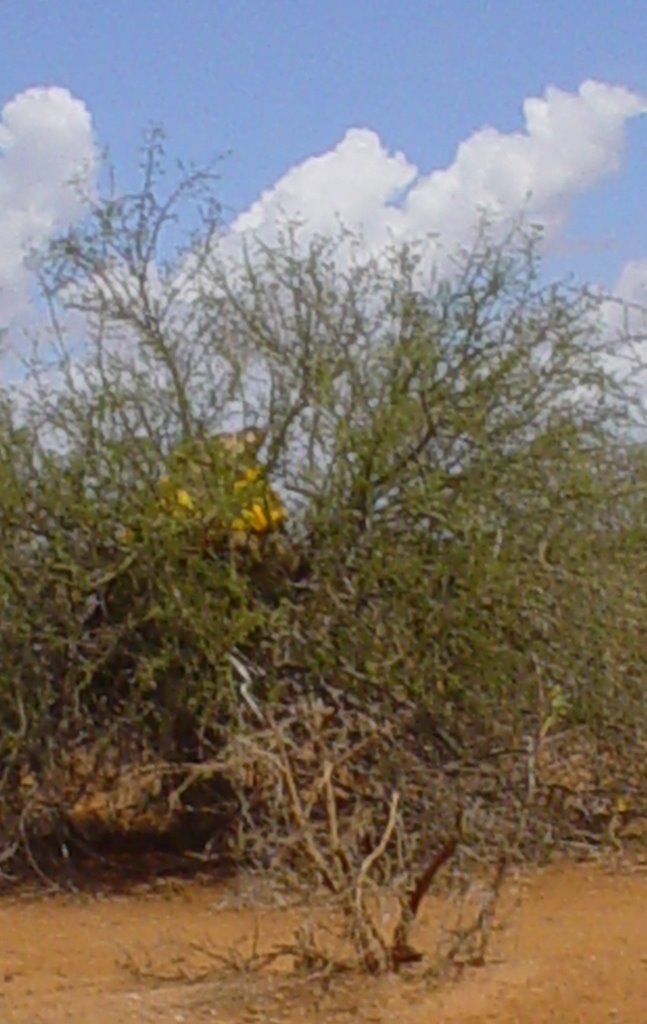
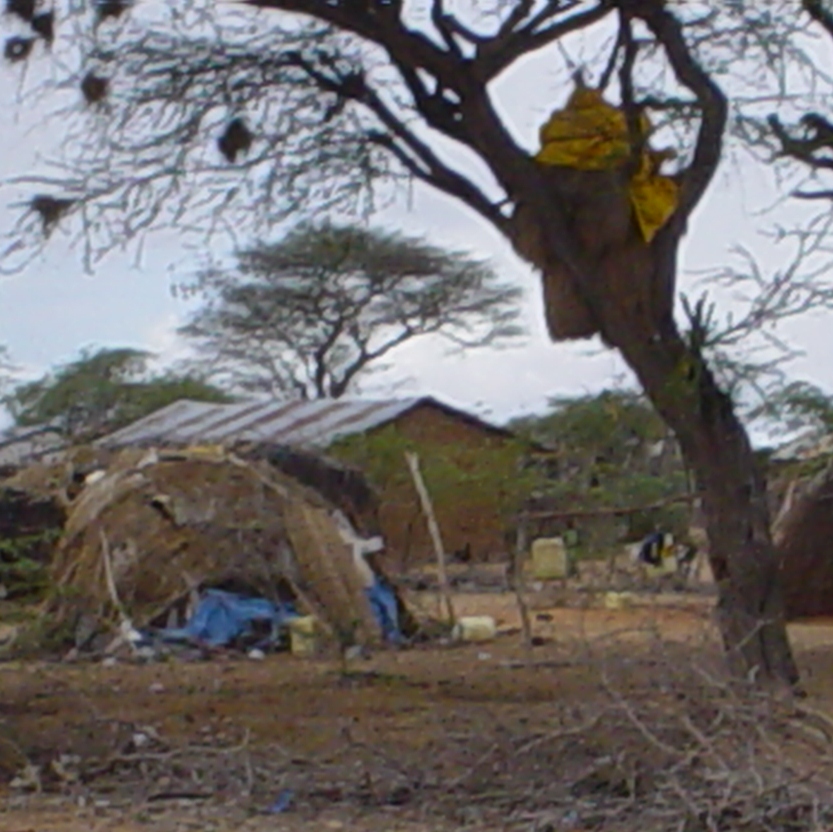
This truly was an interesting sight! When a family needs to move to a different area to hunt for water or pasture, they simply pack up their house and store it in a tree! This isn't the best picture, but I think you can see the yellow bundle. That's their house. The houses are primarily constructed of sticks. The vast majority had a bright yellow plastic tarp over the top for keeping the rain out (if and when it ever rains). Apparently some relief organization provides the yellow plastic.


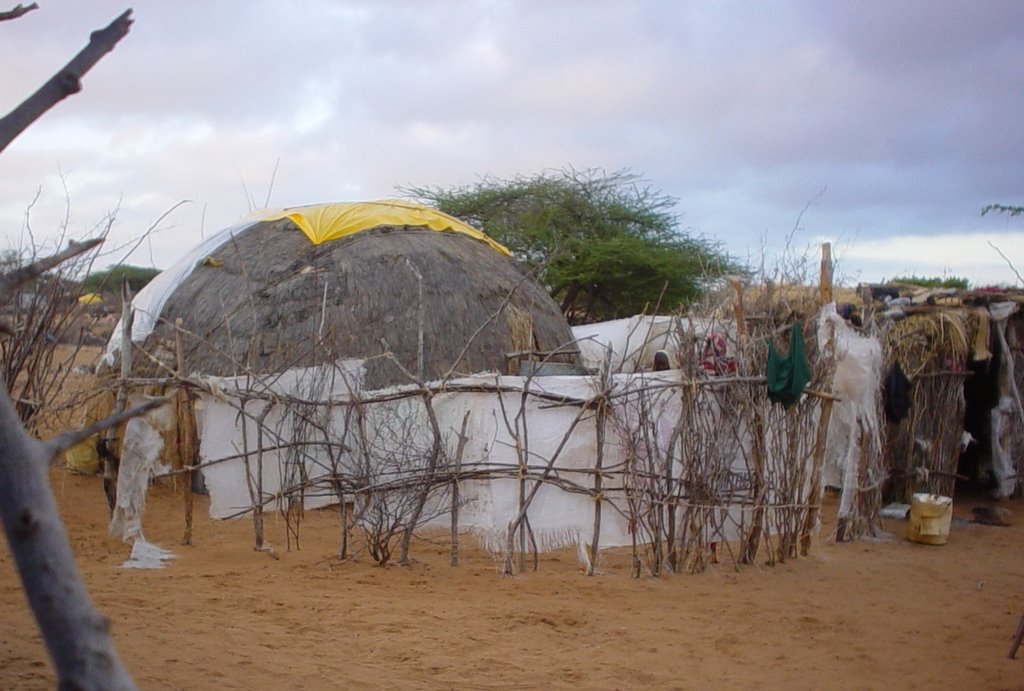
This is a village of such stick "manyatta" houses.


Notice the bundle in the tree. That's another house awaiting the return of the owners. Interesting, huh?


And... another shot of a village of plastic-yellow-tarped stick manyattas.


More Houses


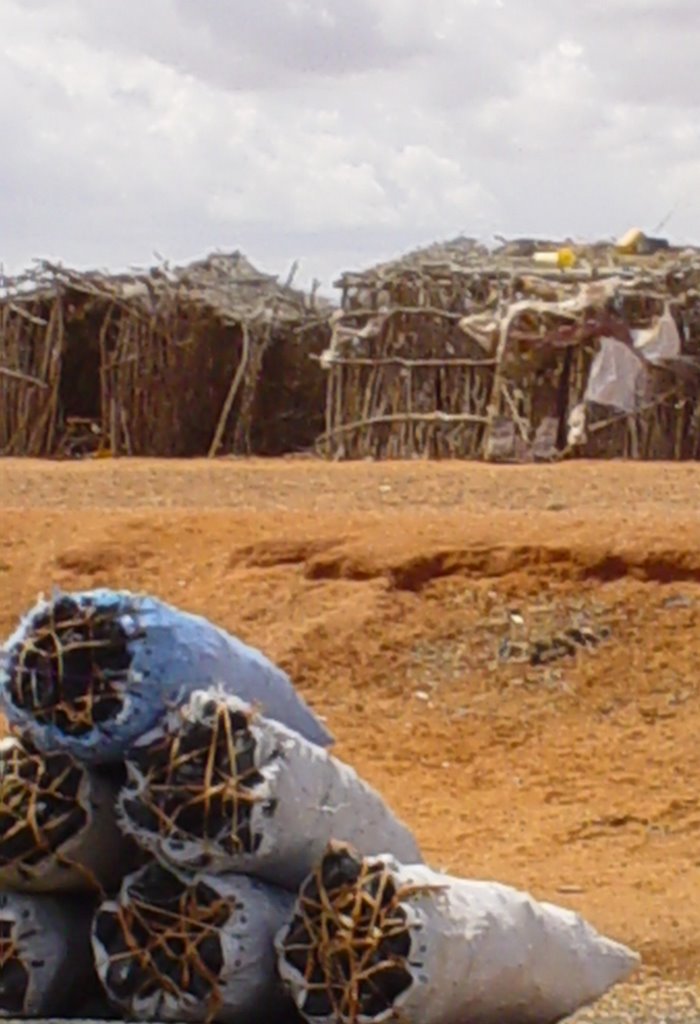
The bags contain charcoal for cooking fuel. They are sitting alongside the road awaiting a buying customer. This is a very common sight throughout Kenya.


I think you can see the interesting contrasts. Their homes are built of sticks (or sometimes mud) - both of which are an earth-brown color.

Then there's this almost contradictory splash of color - yellow for the roofs, or sometimes white plastic pieces (used here to assist the wind protection of the fence).

I guess, all over the world, people groups use whatever materials are at hand to construct some sort of roof over their heads and shelter from the elements.


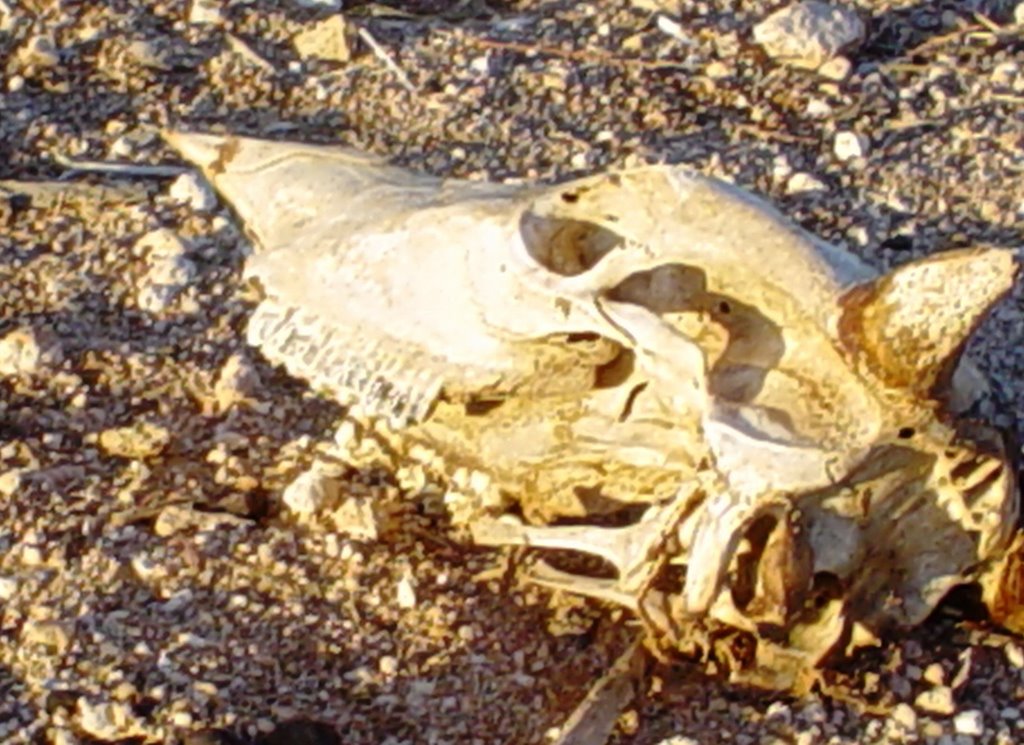
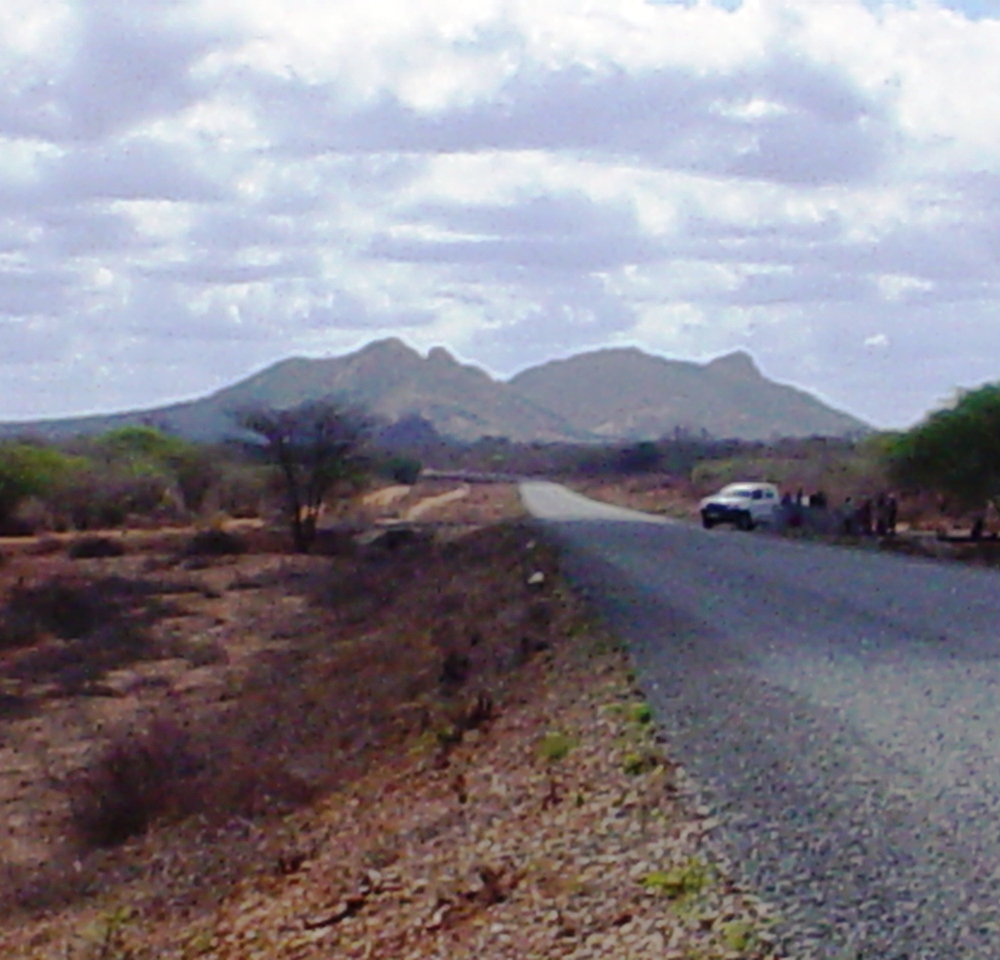
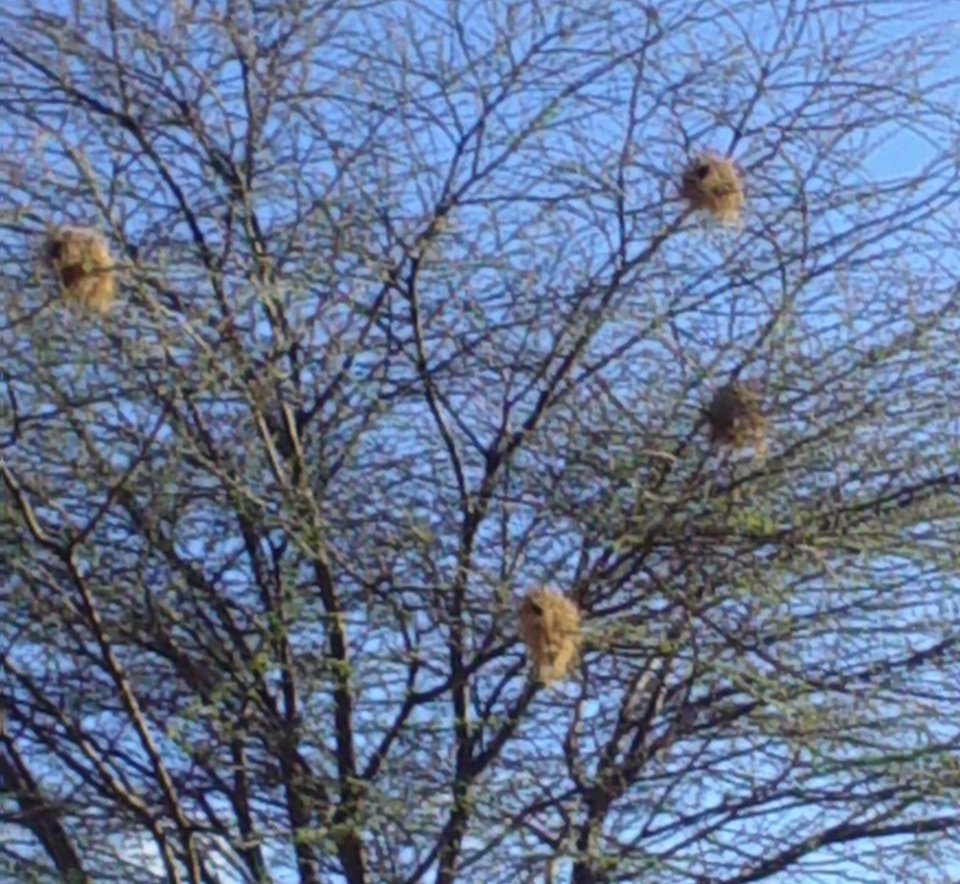
Goat Skull, Seasonal Lake, the Road, Bird Nests


As we left Nairobi and drove through Thika and on towards Mwingi, the scenery was green and lush. But it changed rapidly as we dropped in elevation. Nairobi is almost a mile in elevation; Garissa is at only 600 feet above sea level. It’s an arid area and suitable only for grazing livestock. As a matter of fact, 80% of Kenya is ASAL – Arid and Semi-Arid Land.
We saw lots and lots of goats, donkeys, camels, and cattle, to be sure!
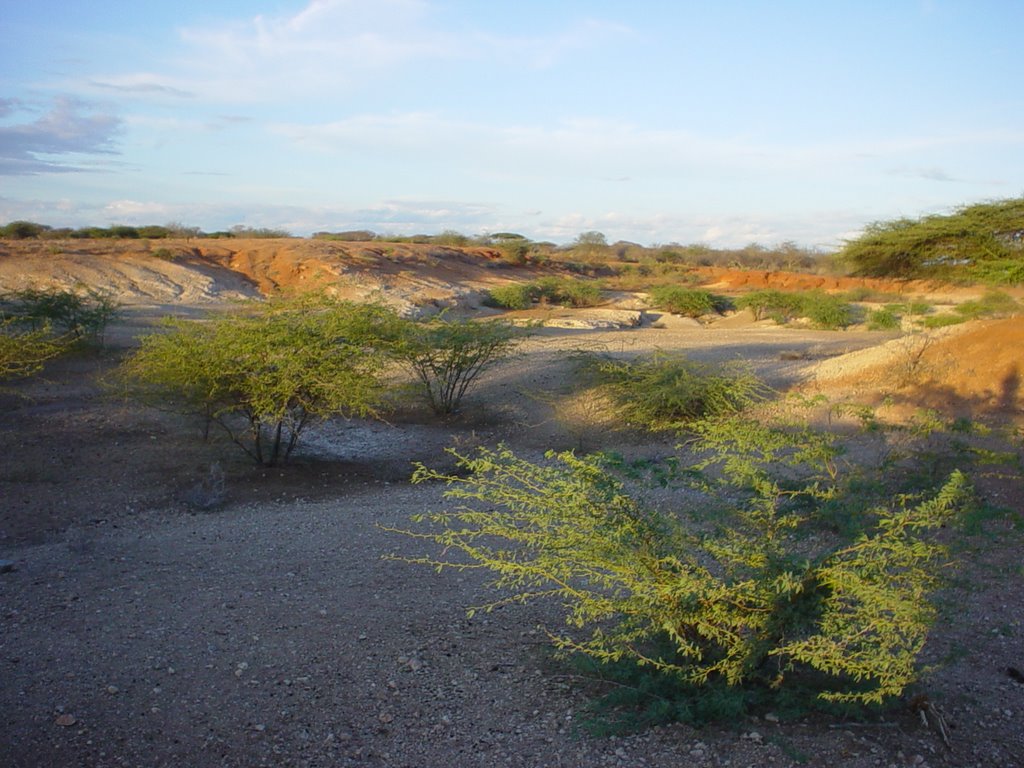
There are many seasonal rivers throughout the area. Except when it rains and the rivers roar with rushing water, they remain bone dry. There are also a few seasonal lakes, like this one.

Baobob Trees


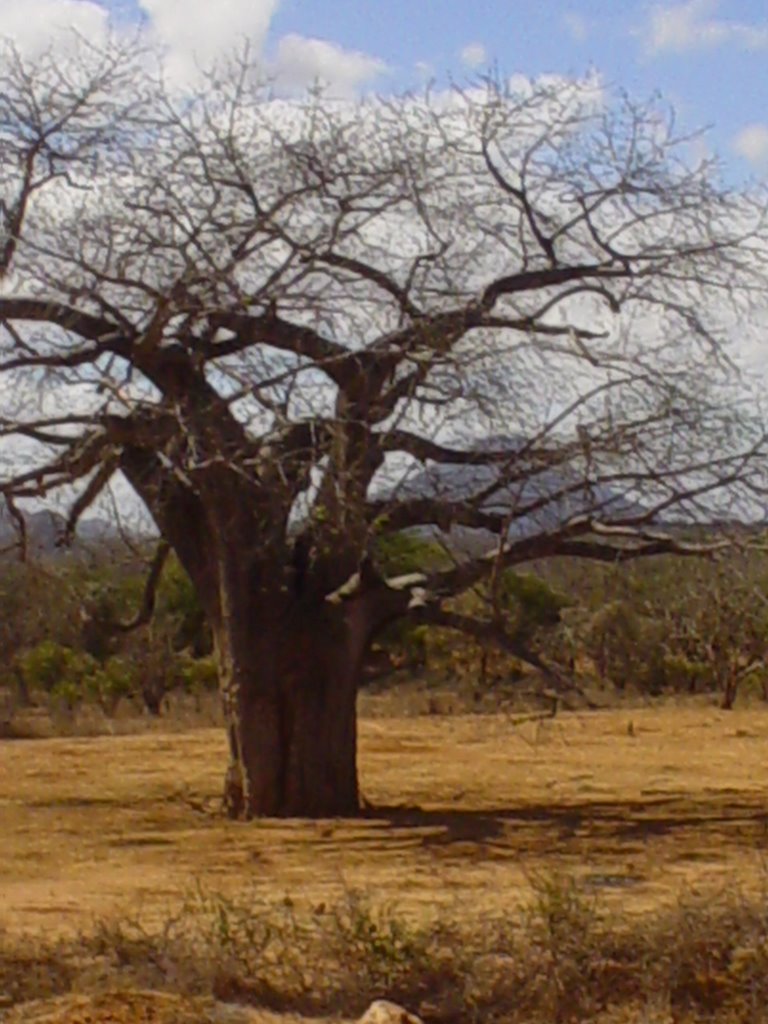
The baobab (or monkey bread tree) are native to Africa and Australia. They reach heights of 15-80 feet, and up to 23 feet (exceptionally 36 feet) in trunk diameter. They are noted for storing water inside the swollen trunk, with the capacity to store 32,000 gallons of water to endure harsh drought conditions. All occur in seasonally arid areas and are deciduous - shedding their leaves during the dry season. Some are reputed to be thousands of years old. Because the wood doesn’t produce annual growth rings, this is impossible to verify.


Besides the prolific and many-varied Acacia trees, the Baobob - at least in my mind - has to rank as the 2nd quintessential tree of Kenya (and perhaps all of Africa). They are almost amusing. They appear to me to be akin to a young child's drawing of a tree. I enjoy viewing them. God certainly expressed Himself creatively in the earth's variety of plant and animal life.

By the way...

It seems there's been some problems with folks posting comments on my blog. You don't need a Google account. Anyone can post.

Just click the "Anonymous" circle, compose your comment (please leave your name at the end), and click the "Login and Publish" button. It's that simple!

03 November 2006

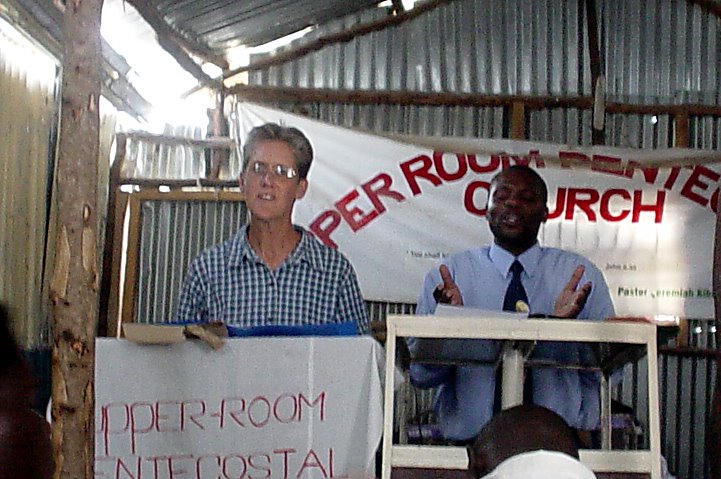
Me Teaching God's Word at Kwa Njenga

Please pray that the ever-present communication gap isn't a hindrance to my teaching. Both Jeremiah and Karo are good interpreters, but still the three languages (American English, Kenyan English, and Swahili) can be confusing at times.


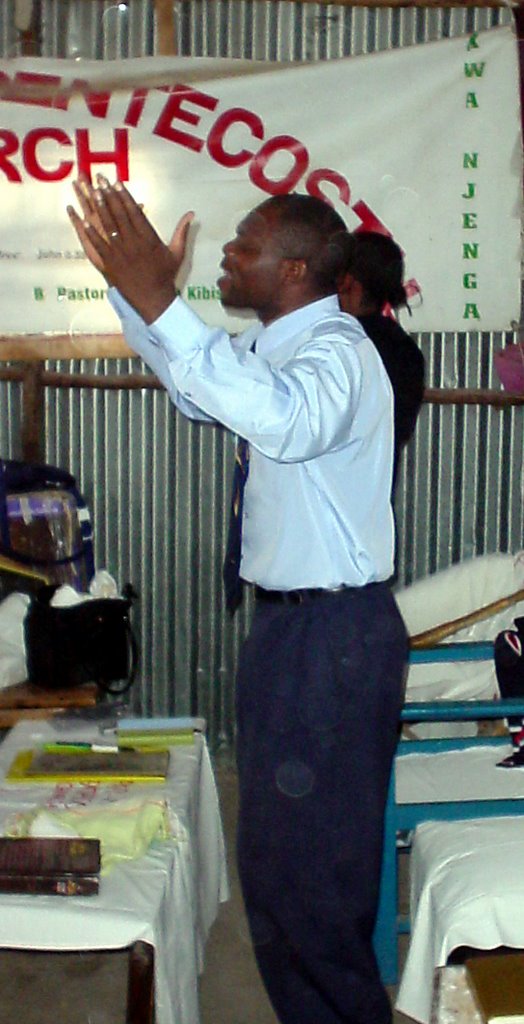
Jeremiah worshiping the Lord.